Corporate Chauffeur Service Malaysia : Monthly Contract vs. Ad-Hoc
February 25th, 2026
Share
Facebook
Twitter
LinkedIn
Email
Managing corporate logistics in a bustling economic hub requires absolute precision. For multinational corporations and rapidly expanding enterprises operating in Kuala Lumpur, transportation is never just about getting from point A to point B. It is a critical component of operational efficiency, corporate image, and executive safety. A reliable corporate chauffeur service Malaysia is no longer considered a luxury. It has become a strategic necessity for businesses that want to optimize their resources and protect their most valuable assets: their people. However, the true challenge for procurement and human resource departments lies in choosing the right engagement model. Should your company rely on ad-hoc bookings, or is a long term driver contract the more financially sound decision?
Disclaimer: The following content is intended to provide a comprehensive comparison of corporate transportation models in Malaysia. Service terms, contract stipulations, and pricing models may vary based on specific business requirements.
This comprehensive guide is designed to dissect the financial and operational implications of both transportation models. We will explore how relying on on-demand services provides flexibility but often sacrifices consistency. Conversely, we will analyze how committing to a long-term partnership can stabilize your monthly operational expenditures while elevating your corporate prestige. When executive time is literally money, delays caused by poor logistics translate directly into lost revenue. By the end of this analysis, decision-makers will possess the clarity needed to structure a transportation strategy that aligns perfectly with their corporate goals, budgeting cycles, and executive demands.
📍 Local Insight: Navigating the Klang Valley business districts (such as KLCC, Bukit Bintang, and Bangsar South) during peak corporate hours is notoriously challenging. Heavy traffic congestion and limited premium parking spaces can severely disrupt tight executive schedules. Implementing a dedicated corporate transportation strategy ensures that your management team can bypass these logistical nightmares and focus entirely on their core business objectives.
Understanding the Demand for a Corporate Chauffeur Service Malaysia
The corporate landscape in Malaysia is evolving rapidly. As more international companies establish their regional headquarters in Kuala Lumpur, the standard for executive treatment has significantly increased. Historically, companies would purchase a fleet of luxury vehicles and hire in-house drivers. While this approach provided a sense of ownership, it also introduced a massive administrative burden. Companies found themselves dealing with vehicle depreciation, unpredictable maintenance costs, complex insurance liabilities, and the constant human resource challenges of managing driving staff. Today, agile businesses prefer to outsource these headaches to specialized professionals.
Outsourcing your transportation needs to a dedicated corporate chauffeur service Malaysia allows your company to focus on its primary revenue-generating activities. You are essentially shifting the burden of fleet management, driver training, and vehicle maintenance onto a third-party expert. This transition is not merely about convenience. It is a calculated move to reduce liability. Professional chauffeur agencies carry comprehensive commercial insurance, ensure their drivers undergo rigorous background checks, and maintain their vehicles to immaculate showroom standards. For a corporate entity, this guarantees a consistent level of safety and prestige without the associated ownership risks.
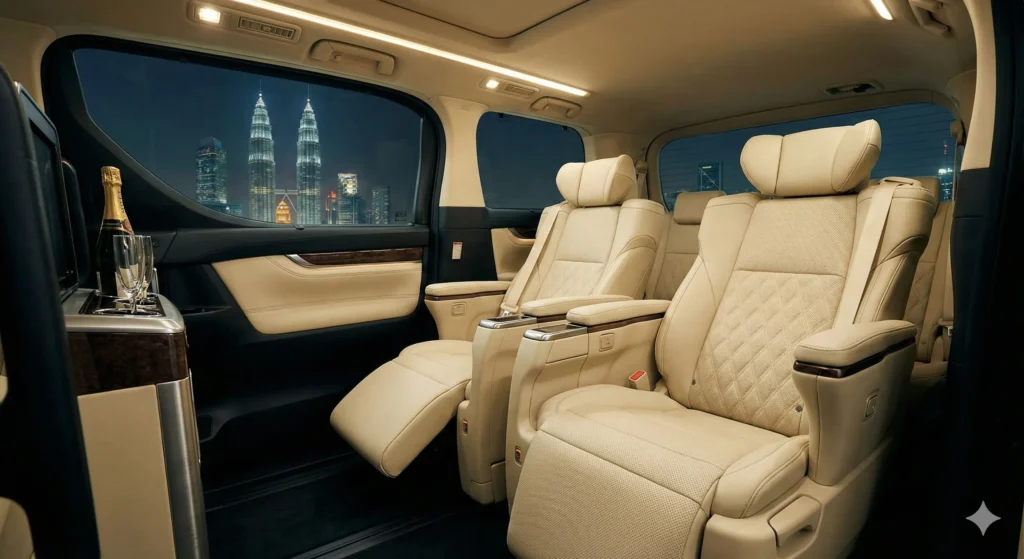
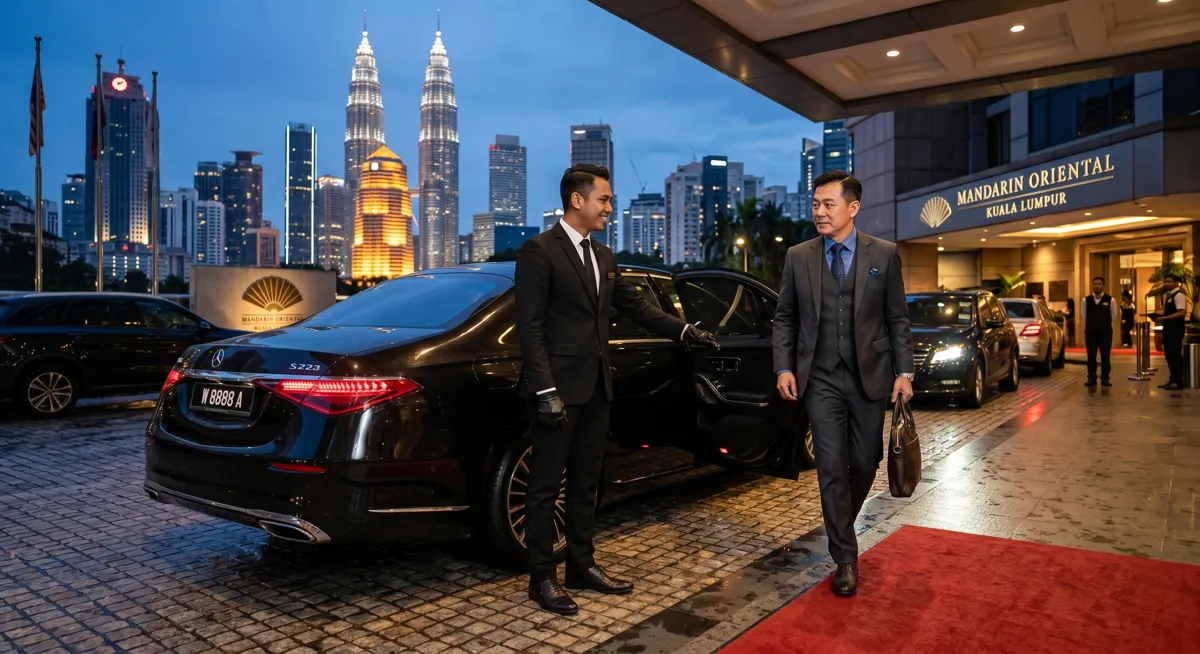
Furthermore, the demand is driven by the need for a flawless corporate image. When you are hosting foreign investors, potential business partners, or global board members, first impressions are critical. Dispatching a premium, unbranded luxury vehicle with a professionally attired chauffeur communicates stability, success, and meticulous attention to detail. It shows your guests that you value their comfort and security. Whether you require a single executive sedan for your CEO or a fleet of luxury MPVs for a visiting delegation, specialized corporate transport providers deliver an uncompromising standard of excellence.
Ad-Hoc Corporate Chauffeur Services: Booking on Demand
The ad-hoc model operates strictly on a pay-as-you-go basis. Companies book vehicles and chauffeurs only when a specific need arises. This could involve arranging an airport transfer for a visiting executive, securing a luxury MPV for a one-day site visit, or hiring a fleet of vehicles for an annual corporate gala. The defining characteristic of the ad-hoc approach is its transactional nature. There are no long-term commitments, no minimum monthly spends, and absolute freedom to scale your usage up or down based on immediate requirements.
For many small to medium enterprises (SMEs) or companies with infrequent travel needs, the ad-hoc model appears highly attractive. It allows procurement departments to allocate transportation budgets on a project-by-project basis. If there are no executive visits scheduled for a particular month, the company incurs zero transportation costs. This model requires a reliable partnership with a chauffeur agency that can guarantee vehicle availability even with relatively short notice, ensuring that business operations remain uninterrupted.
However, relying solely on an on-demand strategy requires careful management. Procurement officers must be proactive in securing bookings, especially during peak business seasons or major international conferences held in Kuala Lumpur. Let us examine the specific advantages and the inherent risks associated with managing your corporate logistics on a purely ad-hoc basis.
The Primary Advantages of Ad-Hoc Arrangements
The most significant advantage of an ad-hoc arrangement is ultimate financial flexibility. Your company is not locked into any recurring monthly fees. This is particularly beneficial for startups or branch offices that are still analyzing their executive movement patterns. By paying only for the exact hours or transfers utilized, you maintain strict control over your cash flow. This model is exceptionally efficient for businesses that host VIPs only three or four times a year.
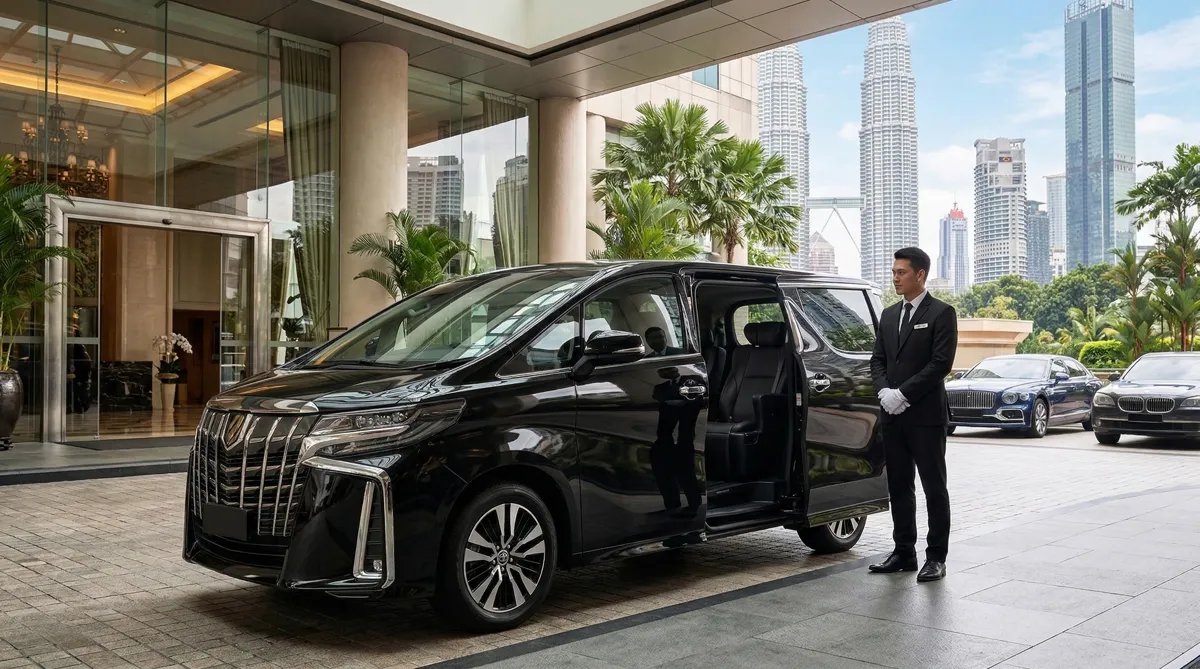
Another major benefit is the ability to select specific vehicles tailored to specific events. For instance, you might book a Mercedes-Benz S-Class for a solo CEO arrival on Monday, and then request a spacious Toyota Alphard for a team of engineers conducting a site visit on Wednesday. The ad-hoc model allows you to tap into a diverse premium fleet without needing to maintain these different vehicle types in your own corporate garage. You get the exact tool you need, exactly when you need it.
The Risks and Limitations for High-Volume Needs
While flexibility is appealing, the ad-hoc model presents substantial risks for companies with high-volume or daily transportation needs. The primary risk is vehicle and driver availability. Premium chauffeur services are in high demand. If you attempt to book a luxury vehicle at the last minute during a busy period, you may find that the specific vehicle class you require is fully booked. This forces you to either downgrade your transportation or scramble to find an unverified alternative, potentially compromising your corporate image.
Additionally, ad-hoc bookings are subject to fluctuating market rates. While reputable companies offer transparent pricing, the cumulative cost of daily ad-hoc bookings will almost always exceed the cost of a structured corporate package. Furthermore, you will likely receive a different chauffeur for every booking. This means the driver will not be familiar with your executive’s personal preferences, specific office locations, or preferred routes. The lack of consistency can become a source of subtle friction for busy executives who value routine and seamless service.
Long Term Driver Contract: The Strategic Business Choice
For organizations where executive mobility is a daily requirement, transitioning to a long term driver contract is universally the most strategic decision. A long-term agreement typically spans six months to a year or more. Under this model, a dedicated premium vehicle and a specifically assigned professional chauffeur are placed at the exclusive disposal of your company or a specific executive. This model replicates the convenience of having an in-house driver and company car, but it completely removes the heavy administrative and financial burdens associated with asset ownership.
A long-term contract transforms an unpredictable variable cost into a fixed, predictable operational expense. The monthly retainer covers everything. It includes the depreciation of the luxury vehicle, regular preventive maintenance, comprehensive commercial insurance, road tax, and the chauffeur’s salary and benefits. The corporate client simply pays a single invoice at the end of the month. If the assigned vehicle requires servicing, the agency immediately provides a replacement vehicle of equal or higher standard, ensuring absolute zero downtime for your executives.
This level of service integration elevates the entire executive experience. The chauffeur becomes an extension of your corporate team. They learn the executive’s daily schedule, preferred cabin temperature, choice of reading materials, and the most efficient routes to frequent meeting locations. This seamless integration allows the executive to use their travel time as highly productive working hours or crucial periods of rest, entirely free from logistical stress.
From a purely financial perspective, a long term driver contract makes exceptional sense for modern corporate accounting. Purchasing luxury vehicles requires a massive Capital Expenditure (CAPEX). It ties up significant company capital in depreciating assets. By utilizing a long-term corporate chauffeur lease, the cost is shifted entirely to Operational Expenditure (OPEX). This improves the company’s balance sheet, preserves cash flow for core business investments, and often provides better corporate tax deductibility options.
Furthermore, it eliminates all hidden costs. When a company owns a vehicle, the finance department must constantly process unpredictable invoices for changing tires, unexpected mechanical repairs, and fluctuating insurance premiums. With a structured contract, the monthly rate is locked in. The provider absorbs all the maintenance risks. Budgeting becomes perfectly predictable, allowing procurement and finance teams to forecast their annual expenditures with absolute accuracy.
Corporate Chauffeur Service Malaysia: Dedicated Drivers & Enhanced Corporate Security
Executive security is a paramount concern for multinational corporations. When you utilize ad-hoc services or public e-hailing, your executives are exposed to a rotating cast of unknown drivers. A long-term agreement solves this by providing a dedicated, thoroughly vetted professional. The chauffeur assigned to your contract undergoes extensive background checks, defensive driving courses, and rigorous confidentiality training. They are bound by strict Non-Disclosure Agreements (NDAs), ensuring that any sensitive corporate conversations held within the vehicle remain absolutely private.
Over time, this dedicated chauffeur builds a strong rapport with the executive. They learn to anticipate needs and recognize potential security or logistical issues before they arise. If the assigned chauffeur falls ill or takes annual leave, the provider seamlessly supplies a fully briefed replacement. The human resource department is completely freed from the nightmare of managing driver schedules, handling disciplinary issues, or processing payroll for driving staff.
Head-to-Head Comparison: Which Model Fits Your Business?
Choosing between ad-hoc bookings and a long-term contract ultimately depends on your company’s operational tempo and financial strategy. There is no universally correct answer, only the model that aligns best with your specific data. To make an informed decision, procurement officers must conduct a thorough internal audit of their transportation usage over the past twelve months. By analyzing frequency, total expenditure, and executive feedback, the correct path will become evident.
To assist in this decision-making process, we have broken down the core differences between the two models across the most critical corporate metrics. Understanding these direct comparisons will enable you to present a rock-solid business case to your board of directors, whether you are arguing for the flexibility of on-demand services or the stability of a dedicated corporate fleet contract.
Below is a detailed analysis of how each model impacts your daily operations and your bottom line.
Cost Management and Budgeting
In the realm of cost management, the two models serve entirely different purposes. Ad-hoc services are ideal for minimizing baseline costs. If your transportation needs are sporadic, paying a premium per trip is still cheaper than maintaining a monthly contract. However, as the volume of trips increases, the ad-hoc model becomes financially inefficient. The cumulative cost of daily individual bookings will rapidly outpace the flat rate of a structured agreement.
A long-term contract is the undisputed champion of budgeting predictability. While the monthly commitment may seem substantial at first glance, it effectively caps your transportation expenditure. You are protected from surge pricing during peak seasons and insulated against sudden spikes in vehicle maintenance costs. For companies with high executive mobility, the cost per trip under a long-term contract is significantly lower than booking those same trips on an ad-hoc basis.
Human Resources and Administrative Burden
Administrative efficiency is where long-term contracts truly shine. Under an ad-hoc system, your administrative staff must generate a new booking, process a new invoice, and handle new communication for every single trip. This constant micro-management drains valuable administrative hours. Reconciling dozens of separate transportation invoices at the end of the month is a tedious task for the finance department.
A long-term arrangement consolidates this entire process. There is one contract to manage and one consolidated invoice to process each month. The service provider handles all the micro-logistics, from driver dispatch to vehicle cleaning. This massive reduction in administrative friction allows your HR and administrative teams to focus on strategic company initiatives rather than functioning as a makeshift taxi dispatch center.
Frequently Asked Questions (FAQ)
Can our company change the vehicle type if we sign a monthly contract? Yes, reputable providers offer flexibility within their contracts. If your executive requires an upgrade from a sedan to a luxury MPV for a specific period, or if you need to swap vehicles due to a change in executive status, terms can be negotiated to allow fleet rotation based on your evolving corporate requirements.
Are petrol and toll costs included in a long term driver contract? This depends on the specific SLA (Service Level Agreement) chosen. Many corporate packages are structured as “Dry Leases” where the company covers fuel and tolls based on actual usage, ensuring you only pay for what you consume. Alternatively, “All-Inclusive” packages can be structured to cover a set mileage limit per month.
What kind of insurance coverage is provided for corporate passengers? Professional chauffeur services must carry comprehensive commercial vehicle insurance and passenger liability coverage. This ensures that in the highly unlikely event of an incident, your executives and your company are fully protected against liability, far exceeding the basic coverage found in standard public transportation or personal vehicles.
Conclusion
Securing a reliable corporate chauffeur service Malaysia is a critical investment in your company’s operational efficiency and executive wellbeing. Whether you choose the agile, pay-as-you-go flexibility of ad-hoc bookings or the rock-solid stability and prestige of a long term driver contract, the goal remains the same. You must ensure that your leadership team travels safely, comfortably, and punctually.
For high-volume needs, transitioning to a dedicated contract is the most financially and operationally sound strategy. It eliminates administrative headaches, standardizes costs, and provides an unparalleled VIP experience. If you are ready to explore how a dedicated premium MPV can transform your corporate roadshows, read our guide on the Chauffeur Driven Alphard in KL. To discuss custom corporate billing and view our professional track record, connect with our management team on our LinkedIn Company Page. Elevate your corporate logistics today.
When transporting foreign dignitaries, ultra high net worth individuals, or corporate titans across Kuala Lumpur, the margin for error is absolutely zero. Standard limousine services may focus purely on aesthetics…
When high-net-worth individuals, corporate executives, or diplomats travel, safety is never just an afterthought, it is the absolute priority. Finding a safe private driver KL requires more than just booking…
When it comes to executive travel in Kuala Lumpur, the debate often boils down to private driver vs Grab Premium. For many, the convenience of a mobile app seems like…
Your wedding day is a once-in-a-lifetime milestone that demands absolute perfection in every detail. Securing a premium wedding car rental with driver KL is not just about transportation; it is…
Planning a seamless family getaway to Malaysia’s premier entertainment peak requires flawless logistics. When you book premium transport to Genting with driver, you are actively choosing peace of mind, unparalleled…
In the high-stakes arena of global business, time is not merely money; it is leverage, opportunity, and power. Kuala Lumpur has rapidly evolved into one of Southeast Asia’s most vital…
Managing corporate logistics in a bustling economic hub requires absolute precision. For multinational corporations and rapidly expanding enterprises operating in Kuala Lumpur, transportation is never just about getting from point…
After enduring a long, exhausting international flight, the last thing any traveler wants is to navigate a chaotic arrival terminal. Landing in Malaysia should be the beginning of an exciting…
Premium chauffeur service in Kuala Lumpur specializing in airport transfer KLIA, executive chauffeur service, corporate transport, wedding chauffeur, car rental with driver and private tour transportation across Malaysia.